Ka Ora Te Taiao
Restore
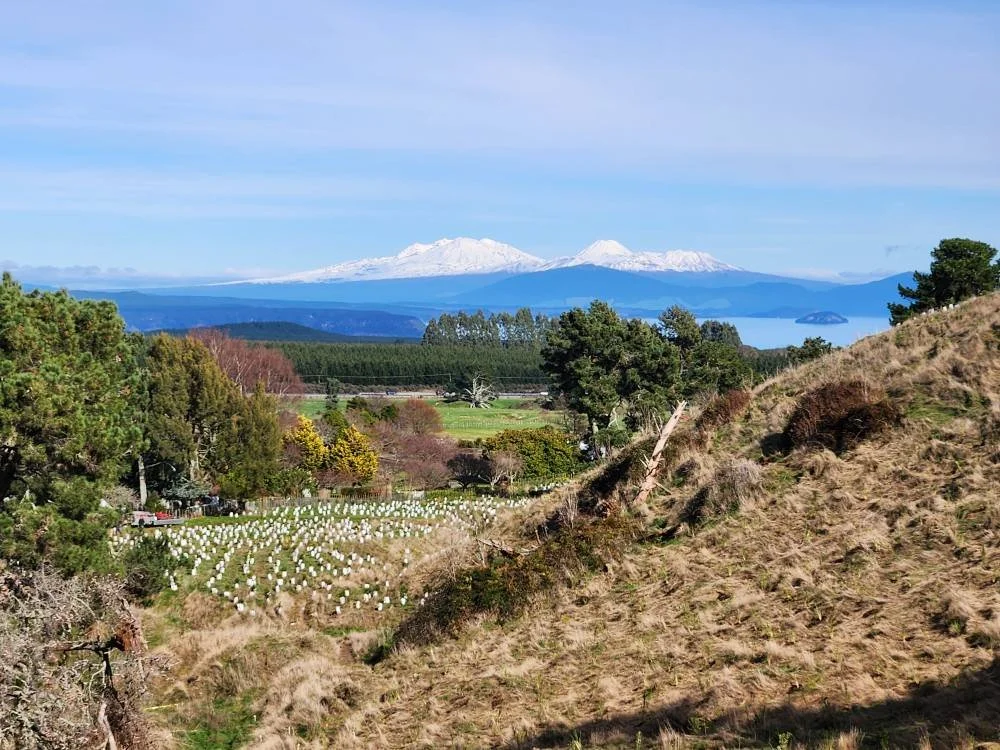
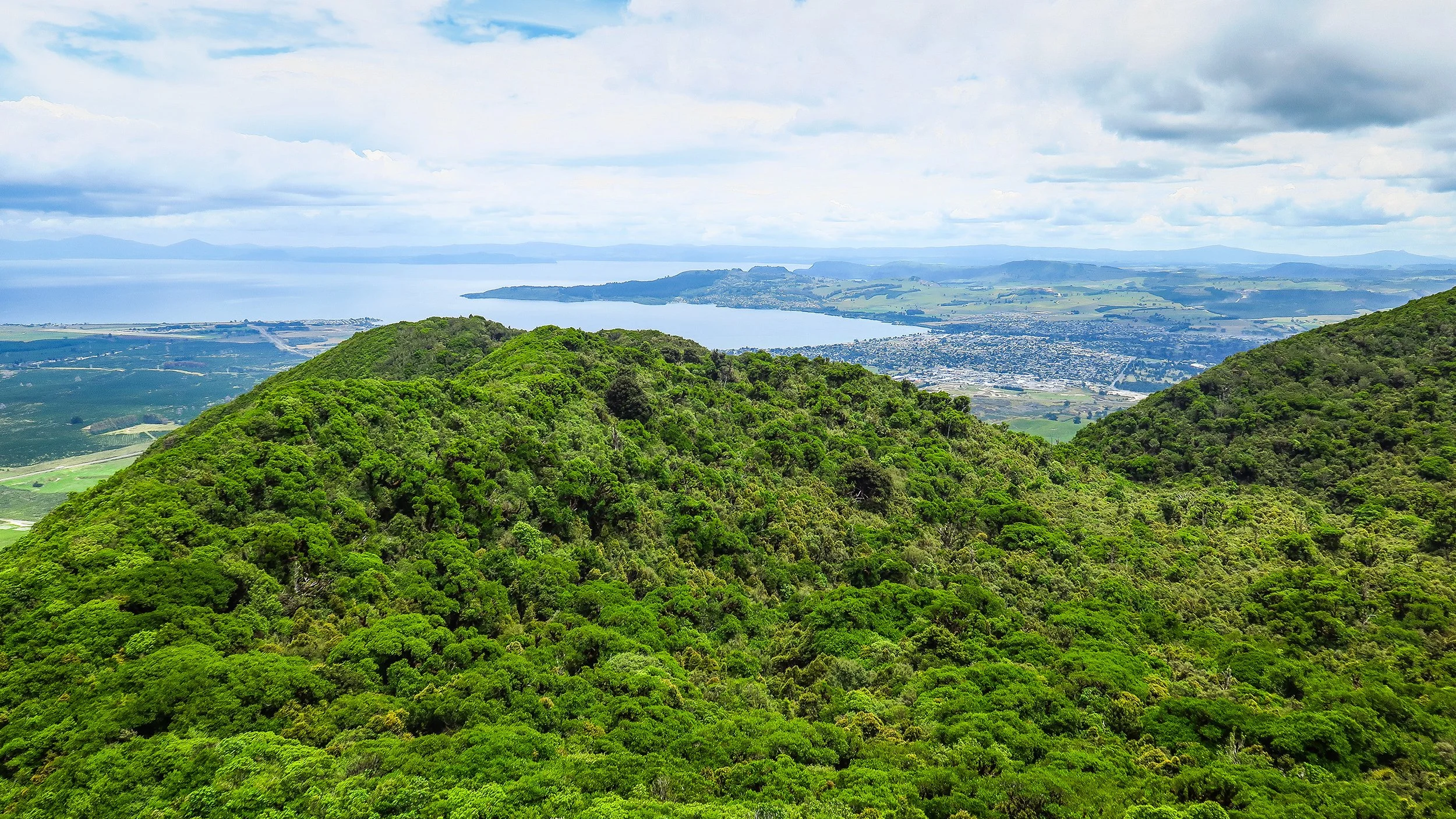
Tauhara Kitea — Recloaking the korowai of Tauhara Maunga
Goal: Ka Ora Te Taiao — Restore
Location: Mountain Road, Tauhara Maunga
Lead Partners: Tauhara Middle 15 Trust and Te Mana o Tauhara Trust
Status: Ongoing, established 2023
A staged native afforestation programme converting retired farmland into permanent indigenous forest, recloaking the korowai of Tauhara Maunga one hectare at a time for the mokopuna who will inherit it.
Since 2023, we've established around 18,000 native plants across 16 hectares at a 96% survival rate, with tamariki from 30 local kura, schools and kōhanga growing and planting alongside us.
By 2027, we're aiming to have transitioned 16 hectares into native ngahere.
[Read the full Tauhara Kitea case study →]
Decades of transitioning ngahere into pastoral farming have impacted the taiao of Tauhara Maunga, leaving retired farmland exposed to erosion and sediment runoff. Without active intervention, these effects will compound with current climate pressures. Tauhara doesn't sit in isolation either. As surrounding land continues to be cleared or converted, the maunga risks becoming an ecological island, cut off from the native corridors that species need to move, feed and breed across the wider Taupō landscape.
Te Mana o Tauhara and Tauhara Middle 15 Trust, an Ahu Whenua Trust representing the whānau who own this land, established Tauhara Kitea to convert retired farmland on the lower slopes of the maunga into permanent indigenous forest, using plants eco-sourced from within the Taupō rohe.
Every hectare returned to ngahere here is a step toward reconnecting Tauhara to Opepe Reserve, Pueto Gorge and the wider network of significant natural areas across the region.
Plants are sourced from He Tipu Nursery, and on-the-ground planting is led by Ngā Mahi Kaha and Advance Landscape Systems, whose kaimahi carry whakapapa connections to the whenua they are restoring.
Since 2023, around 18,000 native plants, kānuka, harakeke, toetoe, kōhūhū, karamū, māpou, tōtara, mānuka, tawa and kiokio, have been established across 16 hectares at a 96% survival rate, well above the regional benchmark. More than 3,000 seedlings have been grown and planted by local tamariki through Trees for Survival and Kids Greening Taupō, a network reaching 21 kura, schools, kōhanga and hāpori groups each year.
By 2027, we're aiming to grow this to complete 16 hectares.
Come plant with us. Community planting days run throughout the year, everyone is welcome.
Ngā mihi to our project supporters and funders: Ngā Mahi Kaha Ltd, He Tipu Nursery, Project Tongariro, Greening Taupō, Waikato Regional Council and Waikato Catchment Ecological Trust.
Key Stats
-
3,000+
Donated stems grown by local kura and community groups
-
16
hectares under active native restoration and regenerative
-
96%
average plant survival rate at three-year monitoring, well above the regional benchmark
-
19
Tūwharetoa uri employed, trained or contracted through this mahi
-
9
Tūwharetoa affiliated organisations supporting the project
-
10
Partnering local and regional organisations and funders supporting the project
Tauhara Ngāwhā — Protecting a geothermal ecosystem found nowhere else on Earth
Goal: Ka Ora Te Taiao — Restore
Location: Crown Road, Tauhara Block Ltd Partnership Block, Taupō
Lead Partners: Tauhara North Limited Partnership and Te Mana o Tauhara Trust
Status: Ongoing, Year 2 of a 10-year programme
Tauhara Ngāwhā protects 60 hectares of Critically Endangered geothermal ecosystem, one of the rarest and most threatened habitat types in Aotearoa, using a nurse canopy of geothermal kānuka to hold the ground and make way for the rare species that depend on it.
Since 2024, we've established around 10,000 native stems at a 92% survival rate, the first steps in a 10-year programme to fully restore all 60 hectares.
[Read the full Tauhara Ngāwhā case study →
Tauhara Ngāwhā is one of Aotearoa's most ecologically significant, and most threatened, landscapes. Its geothermal ecosystems, fumaroles, heated ground and hydrothermally altered soils, support rare plant communities and invertebrate species found nowhere else on Earth. Decades of pastoral farming, weed encroachment and rabbit browse have pushed these ecosystems to the edge. Without active intervention, they will not recover.
Te Mana o Tauhara and Tauhara North Limited Partnership established Tauhara Ngāwhā to restore and protect 60 hectares of Critically Endangered geothermal ecosystem on the Tauhara North block at Crown Road, Taupō, through a staged 10-year restoration programme.
The programme applies a nurse canopy approach, establishing geothermal kānuka, as the keystone species to stabilise soils, suppress weed reinvasion and create the microhabitat conditions more sensitive companion species need to follow. Since 2024, approximately 10,000 native stems have been established at a 90% survival rate across active restoration blocks. Integrated weed control, rabbit management and stock exclusion fencing protect every restoration gain made.
The programme also supports the planned reintroduction of Dicranopteris linearis, a geothermal forked fern classified as Nationally Endangered and absent from this site for over a decade.
Tauhara Ngāwhā is the fourth largest geothermal habitat remnant in the Wairakei-Tauhara geothermal field, and functions as a reservoir population for geothermal-specialist species across the wider landscape, work here strengthens the resilience of this ecosystem type well beyond the 60 hectares directly restored.
Looking ahead, as the geothermal forest re-establishes over the next decade, we're exploring a visitor pathway through the site for walkers and cyclists, connecting people to the history of this place alongside spaces for outdoor education, so future generations can learn from Ngāwhā as it comes back to life, not just visit it once restored.
Ngā mihi to our project supporters and funders: Ngā Mahi Kaha Ltd, He Tipu Nursery, Nick Singers Ecological Solutions, Contact Energy, Wairakei Environmental Mitigation Charitable Trust and Waikato Regional Council.
Key Stats
-
10,000
native stems established
-
90%
average plant survival rate
-
60 hectares
of Critically Endangered geothermal ecosystem under restoration
-
4th largest
geothermal habitat remnant in the Wairakei-Tauhara field
-
16 Tūwharetoa uri
employed, trained or contracted through this mahi
-
3
partner organisations funding and delivering the programme